
Digital Printing on Corrugated Boxes: A Complete Guide for Modern Packaging

The packaging industry is changing rapidly. Brands, e-commerce businesses, manufacturers, and retailers increasingly need packaging that is not only functional but also attractive, personalized, and produced in smaller quantities.
This is one of the reasons why digital printing on corrugated boxes is becoming an increasingly important alternative to traditional printing methods.
Digital technology makes it possible to print directly onto corrugated cardboard without creating printing plates. Businesses can produce custom corrugated boxes, change designs quickly, and economically manufacture short runs without committing to thousands of identical packages.
For packaging manufacturers and printing companies, digital corrugated printing can open new opportunities and make packaging production more flexible and profitable.
What Is Digital Printing on Corrugated Boxes?
Digital printing on corrugated boxes is a printing process in which a digital printer applies graphics directly onto the surface of corrugated cardboard.
Unlike traditional flexographic printing, digital printing does not require printing plates for each design. The artwork is prepared digitally and sent directly to the printing machine.
This makes the technology particularly suitable for:
custom corrugated boxes;
short-run packaging;
personalized packaging;
product prototypes;
promotional packaging;
seasonal packaging;
limited editions;
e-commerce packaging.
The ability to print directly onto the packaging surface also eliminates several additional production steps.
How Corrugated Box Printing Works
The process of corrugated box printing with a digital printer is relatively straightforward.
1. Prepare the artwork
The customer's logo, graphics, text, images, or other design elements are prepared as a digital file.
2. Load the corrugated cardboard
The cardboard or corrugated packaging is positioned in the printer according to the equipment's specifications.
3. Send the design to the printer
The digital artwork is transferred directly to the printing system.
4. Print directly onto the surface
The printer applies the ink directly to the corrugated cardboard.
5. Finish the packaging
After printing, the corrugated sheets can be processed into the required box format using the appropriate cutting, creasing, folding, and gluing equipment.
This streamlined workflow makes digital printing particularly attractive for customized packaging and short production runs.
Digital Corrugated Printing vs. Traditional Printing
One of the biggest differences between digital corrugated printing and traditional printing is the way the artwork is prepared.
Traditional printing methods may require printing plates, machine setup, and other preparation steps before production can begin.
Digital printing eliminates the need for printing plates.
This creates several advantages.
Digital Printing | Traditional Printing |
No printing plates required | Printing plates may be required |
Suitable for short runs | Usually more economical for large runs |
Fast design changes | Design changes can require additional setup |
Easy personalization | Personalization can be more complicated |
Economical for prototypes | Prototypes may have higher setup costs |
Multiple designs can be produced | Production is often optimized for repeated designs |
For large-volume standardized production, traditional printing can still be a suitable solution. However, when flexibility and customization are important, digital printing can offer significant advantages.
1. No Printing Plates for Corrugated Packaging Printing
One of the most important advantages of corrugated packaging printing with digital technology is the elimination of printing plates.
With traditional processes, every new design may require a new printing plate. This creates additional costs and preparation time.
Digital printing works differently.
The design exists as a digital file and can be sent directly to the printer.
This means businesses can:
eliminate plate production;
reduce setup time;
reduce preparation costs;
change designs quickly;
produce different designs in the same production run.
For companies handling frequent design changes, this can significantly simplify production.
2. Cost-Effective Short-Run Corrugated Box Printing
Many businesses do not need thousands of identical boxes.
A startup may need 50 boxes for a product launch. An e-commerce brand may need 100 branded shipping boxes. A manufacturer may require several prototypes before launching a new product.
Traditional corrugated box printing can become expensive for these quantities because setup and preparation costs must be distributed across a relatively small number of boxes.
Digital printing allows companies to produce economically in smaller quantities.
This makes custom corrugated boxes accessible to:
startups;
small businesses;
e-commerce brands;
local manufacturers;
restaurants;
food producers;
marketing agencies;
event companies.
Small production runs can also become a source of recurring orders as customers expand their businesses.
3. Fast Design Changes and Faster Production
Packaging designs can change frequently.
Companies may need new packaging for:
seasonal campaigns;
holidays;
product launches;
promotional campaigns;
special events;
limited editions;
new product variations.
With digital printing on corrugated cardboard, changing the design does not require creating a new printing plate.
Simply prepare the new artwork and send it to the printer.
This makes it possible to respond quickly to changing market requirements and customer requests.
For businesses that compete on speed, this flexibility can be a significant advantage.
4. Personalization of Custom Corrugated Boxes
Personalization is another major advantage of digital printing on corrugated boxes.
Instead of producing thousands of identical packages, businesses can create different versions of the same packaging.
For example, each box could contain:
a different customer's name;
a unique promotional message;
an individual QR code;
a different product image;
regional information;
a special campaign design.
This is particularly valuable for e-commerce brands and companies using packaging as part of their customer experience.
Custom printed boxes can turn an ordinary shipping package into an additional branding and marketing tool.
5. Create Custom Printed Boxes Without Large Minimum Orders
One of the biggest advantages of digital printing is the ability to produce custom printed boxes without committing to a large minimum order.
This is particularly useful for companies testing new products.
For example, a manufacturer could produce:
1 prototype;
10 sample boxes;
50 boxes for a product launch;
100 boxes for a marketing campaign;
500 boxes for a limited edition.
Once the product becomes successful, the company can increase production volumes.
This flexibility reduces the risk of ordering large quantities of packaging before knowing whether a product or campaign will be successful.
6. Make Packaging Prototypes Faster
Packaging prototypes are an important part of product development.
Before launching a new product, businesses often need to test:
packaging dimensions;
graphics;
branding;
product presentation;
colors and images;
customer response.
Digital corrugated packaging printing allows prototypes to be produced without the setup associated with traditional printing.
This makes it easier to test multiple designs before moving to larger production quantities.
For packaging manufacturers, offering rapid prototypes can also become an additional service and revenue stream.
7. Support Seasonal and Limited-Edition Packaging
Brands increasingly use limited-edition packaging to create excitement around their products.
Examples include:
Christmas packaging;
Valentine's Day packaging;
summer campaigns;
anniversary editions;
collaborations;
product launches;
promotional campaigns.
Traditional printing can be inefficient when a design will only be used for a limited period.
Digital printing on corrugated cardboard makes short seasonal production runs much more practical.
After the campaign ends, the design can simply be replaced with a new one.
8. Reduce Packaging Waste and Inventory
Digital printing can also help businesses manage packaging inventory more efficiently.
Instead of ordering large quantities of one design, a company can produce packaging according to actual demand.
For example, an e-commerce brand can order smaller batches of several designs rather than storing thousands of identical boxes.
This can help reduce:
obsolete packaging;
excess inventory;
storage requirements;
unnecessary material use;
costs associated with outdated designs.
For businesses with frequently changing products or branding, this flexibility can be particularly valuable.
9. Digital Printing on Corrugated Cardboard for E-Commerce
E-commerce is one of the key markets for digital printing on corrugated boxes.
Shipping boxes are often the first physical interaction customers have with an online brand.
A plain shipping box can protect the product, but a custom printed box can also:
reinforce brand identity;
improve the unboxing experience;
communicate promotional messages;
encourage repeat purchases;
include QR codes and social media information.
Because e-commerce companies frequently launch new products and promotional campaigns, the ability to order packaging in smaller quantities can be extremely valuable.
10. Expand Your Corrugated Packaging Printing Business
For packaging manufacturers and printing companies, investing in digital corrugated packaging printing can create new revenue opportunities.
You can offer customers:
custom corrugated boxes;
branded shipping boxes;
promotional packaging;
product prototypes;
seasonal packaging;
personalized boxes;
short-run packaging.
Instead of competing only on the price of standard packaging, your company can offer customized, higher-value solutions.
This can help attract customers that traditional high-volume printing companies may not be able to serve profitably.
What Materials Can Be Used for Digital Corrugated Printing?
Modern industrial digital printers can be designed to work with suitable paper-based packaging materials.
Depending on the printer and ink technology, applications may include:
corrugated cardboard;
cardboard sheets;
kraft paper;
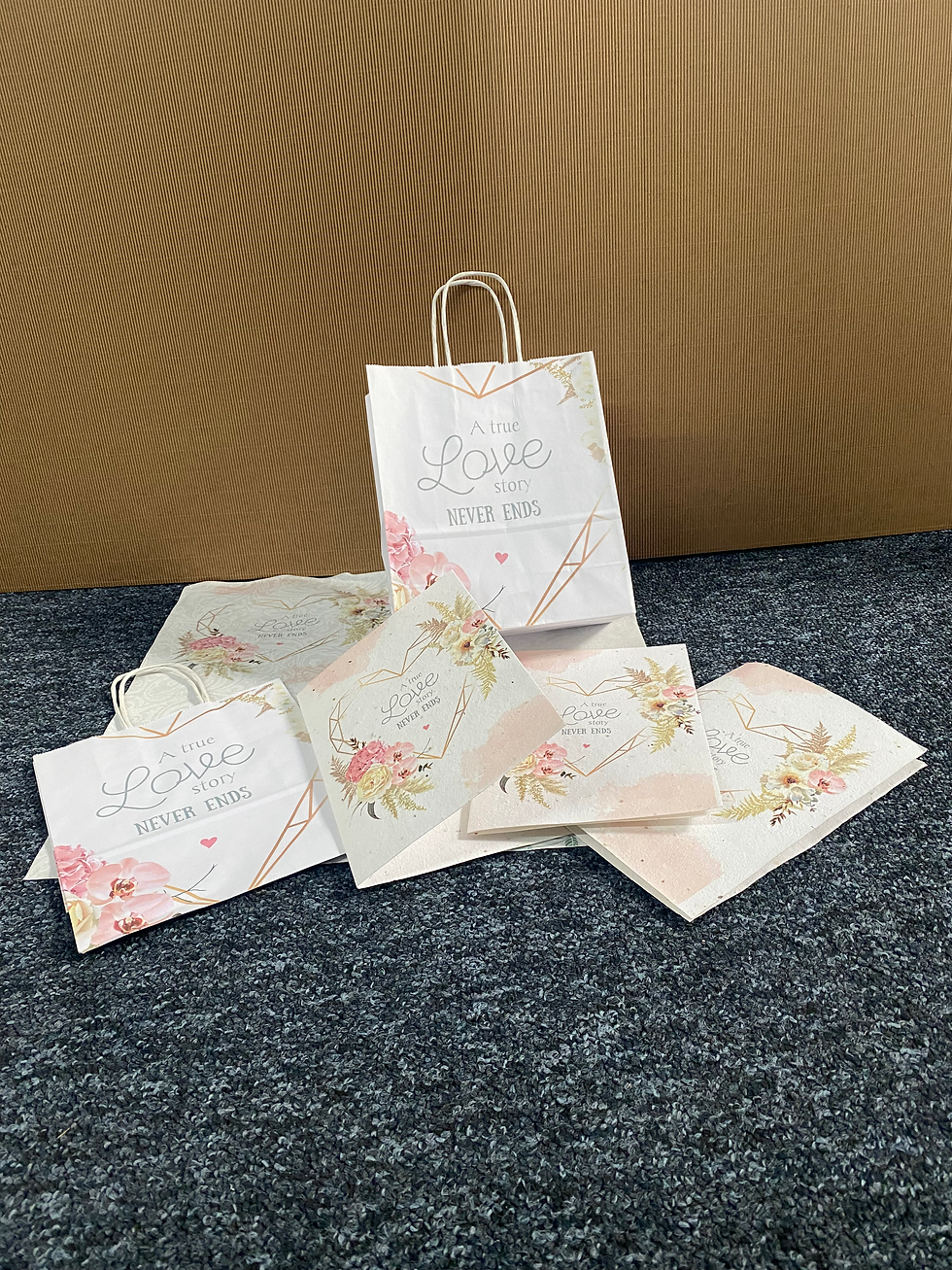
paper bags;
paper-based packaging.
For example, TICAB PRINT industrial printers are designed for direct printing on suitable paper, cardboard, and corrugated cardboard packaging.
This allows businesses to use one printing system for multiple packaging applications.
TICAB PRINT Solutions for Digital Packaging Printing
TICAB PRINT develops industrial digital printing equipment for businesses that need flexible direct-to-material printing.
The company's product range includes TPS, TITAN, and TITAN DOUBLE.
These industrial printers can be used for direct printing on suitable:
paper packaging;
cardboard;
corrugated cardboard;
kraft paper;
natural textiles;
wood;
plywood.
For companies specializing in corrugated box printing, this flexibility can make it possible to expand beyond standard box production and offer customized printing services.
TPS
TPS is a compact industrial solution designed for businesses that need flexible digital printing and short-run production.
TITAN
TITAN is designed for businesses that require an industrial digital printing solution for a wider range of packaging applications and higher production requirements.
TITAN DOUBLE
TITAN DOUBLE is designed for higher productivity and larger packaging applications, making it suitable for businesses looking to scale their digital packaging printing operations.
The right model depends on production volume, packaging formats, print requirements, and business goals.
Is Digital Printing on Corrugated Boxes Profitable?
For many packaging businesses, digital printing on corrugated boxes can create an attractive additional revenue stream.
The technology is particularly useful when customers need:
small quantities;
fast turnaround;
personalized packaging;
multiple designs;
prototypes;
seasonal packaging;
limited editions.
Instead of relying exclusively on large-volume orders, a company can build a diversified customer base with different types of packaging projects.
The ability to accept small orders can also help attract new customers who may eventually grow into larger accounts.
How to Start Offering Digital Corrugated Printing
If you already manufacture packaging or operate a printing business, adding a digital printer can be a way to expand your services.
A practical approach is to:
1. Identify your target customers
Focus on businesses that need short-run and customized packaging.
2. Choose the right equipment
Select a packaging printing machine based on your materials, print area, production volume, and expected growth.
3. Create sample products
Prepare examples of custom boxes, branded packaging, prototypes, and promotional designs.
4. Promote short-run printing
Make small quantities one of your key competitive advantages.
5. Offer personalization
Use variable designs, QR codes, names, promotional messages, and seasonal graphics to increase the value of your service.
6. Develop recurring customers
Target businesses that need packaging regularly rather than relying only on one-time orders.
The Future of Digital Corrugated Printing
The packaging industry is moving toward greater customization, shorter production runs, faster turnaround times, and more flexible manufacturing.
These trends are creating new opportunities for digital corrugated printing.
Brands want packaging that reflects their identity. E-commerce companies want branded shipping boxes. Startups need prototypes and small quantities. Established manufacturers want more flexibility for product launches and promotional campaigns.
Digital printing addresses many of these requirements without the setup limitations associated with traditional printing.
Conclusion
Digital printing on corrugated boxes is changing the way businesses approach packaging production.
The main advantages include:
no printing plates;
lower setup requirements;
cost-effective short runs;
fast design changes;
personalization;
custom printed boxes;
rapid prototyping;
seasonal and limited-edition packaging;
reduced inventory requirements.
For packaging manufacturers, printing companies, and brands, digital corrugated packaging printing offers a way to create more flexible and responsive production processes.
With industrial solutions such as TICAB PRINT TPS, TITAN, and TITAN DOUBLE, businesses can expand their capabilities, offer custom corrugated boxes, and turn digital printing into an additional source of revenue.
As demand for personalized, short-run, and branded packaging continues to grow, digital printing on corrugated boxes is becoming an increasingly valuable technology for modern packaging production.


Comments