
Are Small Print Runs Unprofitable? Learn How to Fix It

If you run a packaging business, you already know the math doesn't work in your favor when a customer asks for a small batch. A request for 50, 100, or even 300 units of custom-printed packaging can end up costing you more to produce than it earns — or forcing you to turn the order down altogether. This isn't a pricing problem. It's a printing technology problem, and it has a straightforward fix.
The Real Reason Small Print Runs Cost So Much
Traditional packaging printing — flexography, offset, screen printing — relies on physical printing plates, clichés, or press moulds. Before a single unit gets printed, you have to:
Create or order a new plate or cliché for the design
Set up and calibrate the press for that specific job
Run test prints to check color and alignment
Absorb the material wasted during setup
None of these steps scale down. A plate for 50 units costs roughly the same as a plate for 50,000 units — but that fixed cost has to be spread across a much smaller number of pieces. The result is simple: the smaller the order, the higher the cost per unit, until short runs stop being profitable at all.
This is why so many packaging producers set a minimum order quantity (MOQ). It's not that they don't want small orders — it's that, with plate-based printing, small orders genuinely don't cover their own setup costs.
What This Actually Costs Your Business
The consequences of an MOQ go beyond a single missed order:
Lost revenue from customers who need less than your minimum and simply go elsewhere
Lost relationships with small and growing businesses who could become long-term, higher-volume clients later
Idle capacity on days when only short-run jobs are on the books
Wasted material from setup and calibration runs on every plate change
Warehouse costs from pre-printing packaging in bulk to avoid frequent, expensive setups — and hoping it all gets used
For a packaging manufacturer, paper bag producer, or contract printer, every one of these adds up to money left on the table, order after order.
The Fix: Digital Printing With No Plates and No Minimums
The setup cost problem only exists because plate-based printing requires physical tooling before it can print anything. Remove the plate, and the problem disappears.
That's exactly what industrial digital printing does. A machine like the TICAB PRINT TPS, TITAN, or TITAN DOUBLE prints full-colour CMYK graphics directly from a digital file onto the packaging material — no plate, no cliché, no press mould, no pre-press preparation of any kind.
Print from 1 piece without minimum orders.
Because there's no tooling to set up between jobs, the cost of printing one unit is essentially the same, per unit, as printing a thousand. There's no fixed setup expense to spread across a production run, so there's no reason to require a minimum quantity in the first place.
In practice, this means:
A single custom order costs about the same per piece as a production batch — because the printer isn't paying off a plate.
Job changeovers happen on screen, not on the press — load a new design file and start the next job immediately.
Print costs start from as little as €0.01 per unit, regardless of run size.
You can quote and accept an order for 1 piece or 5,000 on the exact same machine, with the exact same process.
Why This Matters for Your Business, Not Just Your Customers
Removing the minimum order requirement doesn't just make individual customers happy — it changes what kind of business you can run:
You stop turning away revenue. Every short-run request becomes an order you can accept and profit from, instead of one you decline.
You stop outsourcing what you could keep in-house. Short runs that used to go to a third-party printer — at a lower margin for you — can now be produced on your own line.
You can serve small and growing businesses profitably, building relationships with clients who may scale into larger, recurring orders later.
You can test and prototype economically. Customers who want to see a sample before committing to a large order no longer require a separate, costly setup.
You reduce warehouse risk. Instead of pre-printing packaging in bulk to justify a plate setup, you print on demand, against confirmed orders.
How It Works in Practice
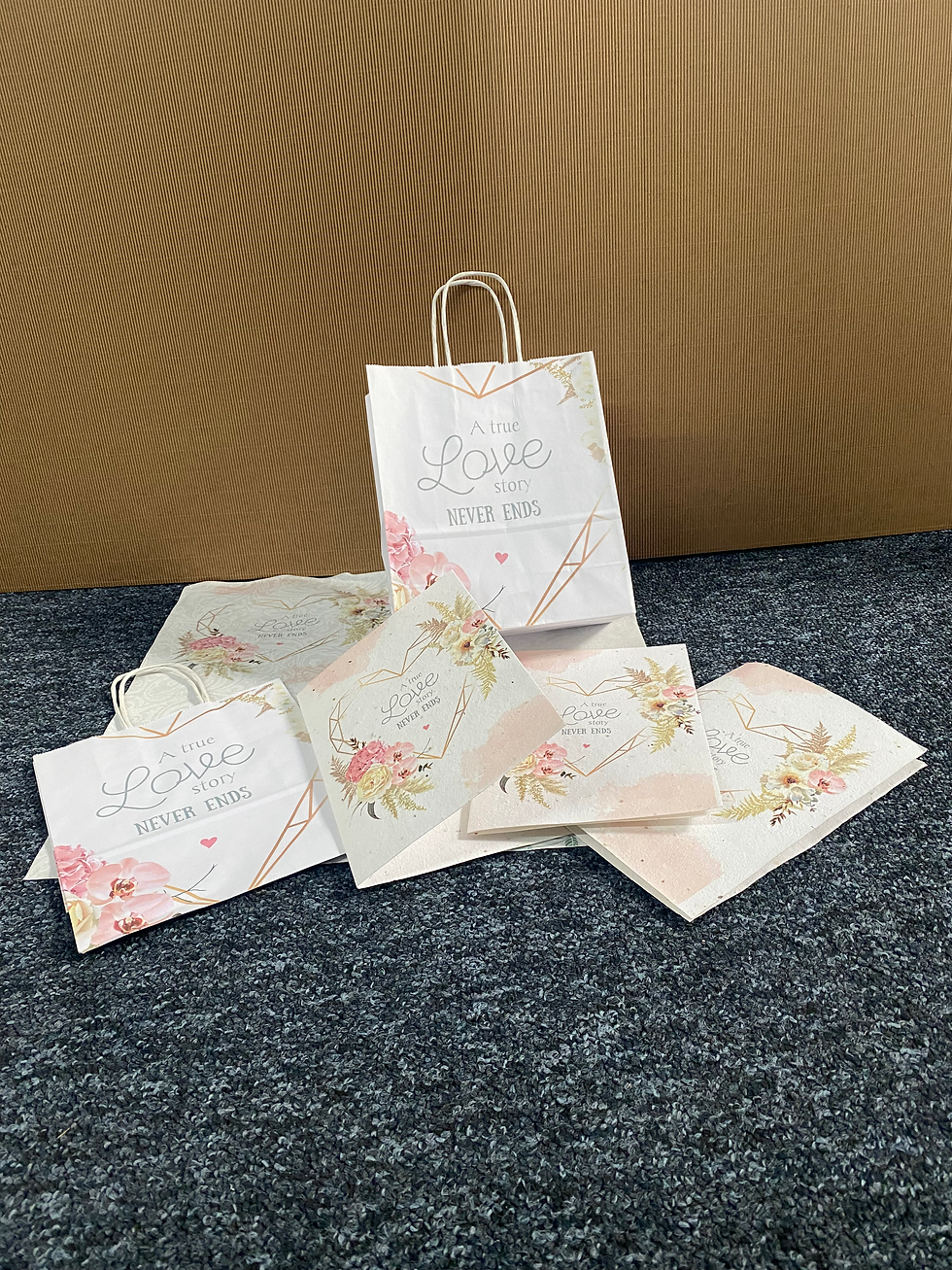
Industrial inkjet printers built for packaging — such as the TICAB PRINT lineup — use HP print head technology to apply CMYK graphics directly onto paper bags, cardboard, assembled or flat boxes, envelopes, textile, or wood. The printer reads the design straight from a file, so switching between one customer's artwork and the next takes minutes, not hours, and requires no new tooling investment.
This is what makes true one-piece printing possible at industrial speed — output that still scales up to dozens of prints per minute when a larger order does come in, without needing a second machine or a different process.
The Bottom Line
Small print runs aren't inherently unprofitable — they're only unprofitable when the printing technology forces every job to absorb the cost of a plate. Digital packaging printing removes that cost entirely, which means the smallest order on your books can be just as profitable as your biggest one.
If minimum order quantities are costing you customers, revenue, or flexibility, it may be time to look at what plate-free, print-on-demand technology can do for your production line.
Want to see what print-from-1-piece production looks like on your product line? Get in touch with TICAB PRINT to request a sample print run or a live demo of the TPS, TITAN, or TITAN DOUBLE industrial printers.
FAQ
Why do most packaging printers require a minimum order quantity? Traditional printing methods (flexography, offset, screen printing) need a physical plate or cliché made for every design. That setup cost has to be spread across enough units to be worthwhile, which is why printers set a minimum order to cover it.
How can digital printing profitably print just 1 piece? Digital printers apply ink directly from a file, with no plate or physical tooling involved. Since there's no fixed setup cost to recover, the cost per unit stays roughly the same whether you print 1 piece or 1,000.
Does removing the minimum order quantity affect print quality or speed? No. Industrial digital printers such as TICAB PRINT's TPS, TITAN, and TITAN DOUBLE maintain full CMYK print quality and high throughput (up to 90 sheets/min) regardless of run size — they simply don't require plate setup between jobs.


Comments